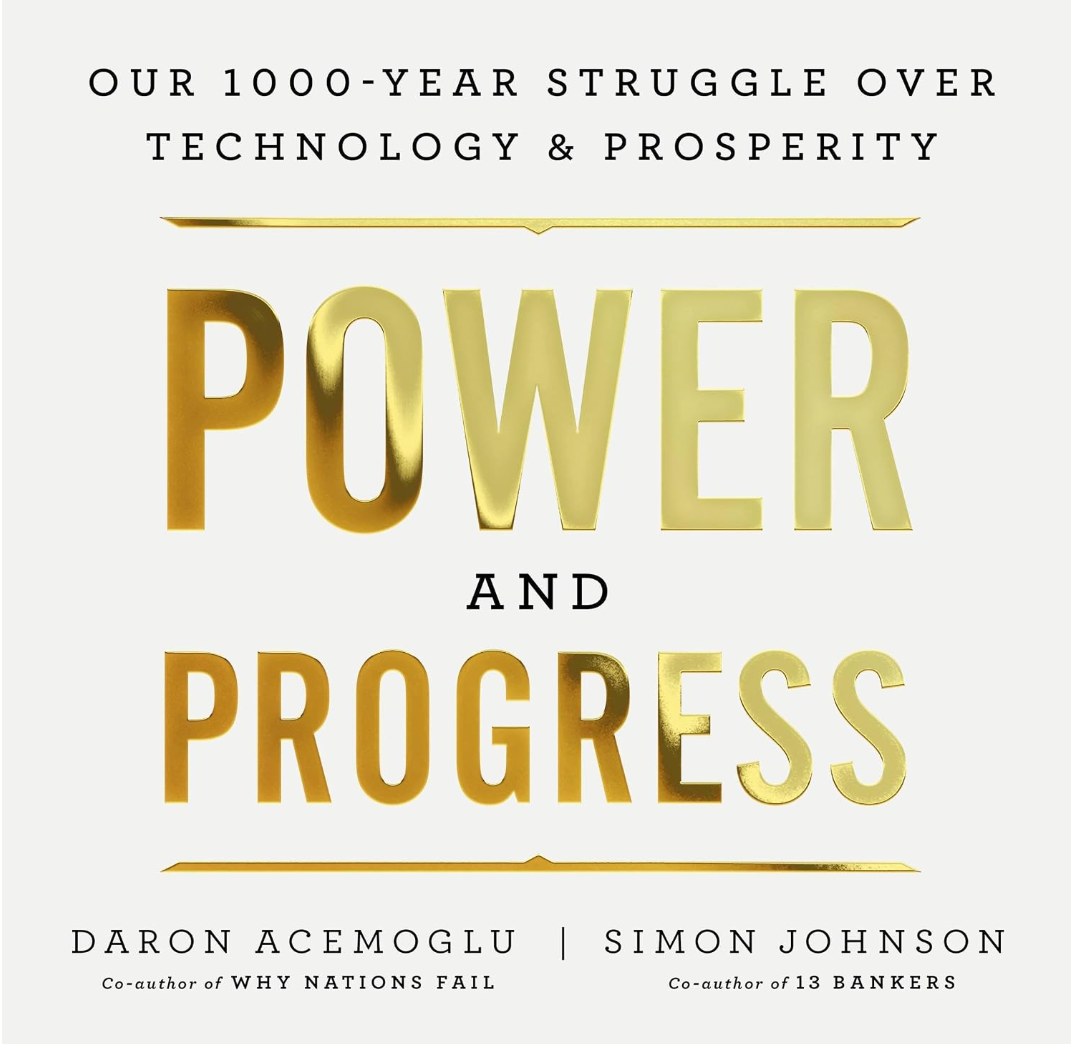
In Power and Progress, MIT economists Daron Acemoglu and Simon Johnson dismantle the techno-optimist myth that innovation automatically benefits society. Through a sweeping historical lens covering a thousand years, the authors demonstrate that the trajectory of technology is a choice rather than a predetermined destiny. From the agricultural advances of the Middle Ages that built grand cathedrals while peasants starved, to the harsh early days of the Industrial Revolution, new ways of organizing production have historically served narrow elite interests before public intervention forced a change.
The book's message is particularly urgent today as we face the rapid deployment of artificial intelligence. Acemoglu and Johnson argue that modern digital technologies currently lean toward excessive automation, threatening to widen income disparities and erode democratic institutions. They highlight the danger of leaving the trajectory of AI exclusively in the hands of a few tech leaders striving to elevate their own prestige.
However, the authors provide a hopeful manifesto for change. By examining how the mid-20th century successfully shared the wealth of technology through government regulation and organized labor, they show that society can regain control. Power and Progress is a sweeping, vital read for anyone interested in economics, history, or the future of work, proving that true prosperity requires proactive social and political action.